
Post-Traumatic Growth
One minute you're having painful conversations with people who enacted trauma on your body, the next you're experiencing a full circle moment.

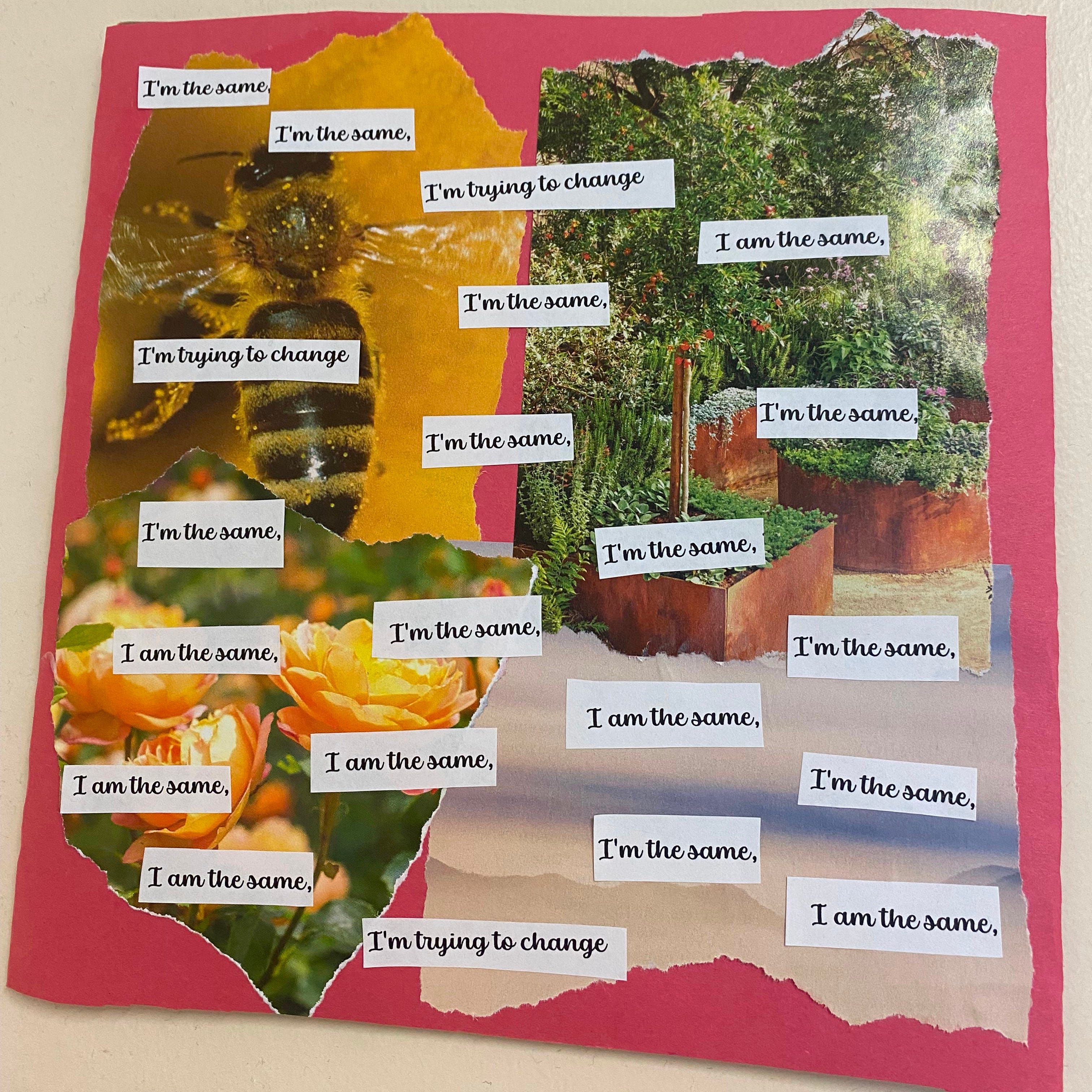
A few weekends ago, I woke up around 6:30 a.m. in my bed on the psychiatric ward, stretching and wiping sleep out of my eyes. I wandered down the hallway to the cafeteria, where mediocre black coffee was waiting to be poured into my Styrofoam cup. After adding copious amounts of half-and-half and sugar to my drink, I went out to the nurses station to glance at the whiteboard and see the schedule for the day. I didn’t get that far. Sitting at the desk behind a plexiglass window was Val,1 a mental health counselor — and the last person I expected to see that morning.
Val worked on South — the sister unit to North — which was the ward I had recently been admitted to. I had spent over a year on South. After months mired with restraints, power struggles, and attachment issues,2 I left South and was promptly banned from stepping back on that unit. For the past year and a half, whenever I have required an admission to inpatient care, I have been sent to North.
Val was not a staff I was particularly close to, though she was often present for some of my worst moments. When I was being forced to take an anti-psychotic that made my brain turn to mush, she patiently helped me complete assignments for my social work courses. She would guide me in deep breathing when I was having a panic attack. There was also the night a nurse told her to forcibly take off my sweater, and she came up from behind me and ripped it off my body — leaving me exposed as I curled up in a ball and cried.3
As I stared at her through the glass, watching as she chatted with other staff, tears welled up in my eyes. I felt out of my body, as though I was back in my bedroom on South, Val’s hands brushing against my skin as she violently removed my clothing. I grabbed my journal and headed to the bathroom. I slumped onto the floor and began to write: Fuck off Val! Go back to South, you don’t care, you’re not going to ask how I am, you’re hurting me and I can’t do an entire shift of this. FUCK.
A nurse knocked on the door. Jo, what’s going on? she asked as I tearfully explained the situation. What do you need? What would be the most helpful?
I want to address it with her, I replied, I want to talk about this with her.
The nurse went to get Val, who promptly showed up at the bathroom door and asked if she could sit. I nodded. I know it’s hard to see me, she started, I was going to come wake you and soften the blow, but you were already up.
I can’t do this, I said through tears, I hate that the worst days of my life were just another day at work for you.
She nodded. Well, they were an eventful day at work. Besides, when I look at you, I don’t remember that stuff. I remember our check-ins, I remember other things.
I don’t remember any of it, I retorted bitterly, All I remember is bad. I took a deep breath. I’m sorry for exhausting all of you. I know I burnt all of you out.
She stared at the floor. Yeah… she replied, Yeah.
Okay… I thought to myself, first she confirms that all my pain is to her is an “eventful day at work,” then she confirms that I was exhausting. We’re off to a great start!
No one would talk about anything over there, I said, no one would name transference or counter-transference. There was so much left unsaid. So much that could have been helped if it had been spoken about.
I know, we were given bad instructions. It wasn’t person-centered or trauma-informed.
I began to cry harder, working myself up. You ripped my shirt off and IGNORED ME AFTER! I shouted, I WAS JUST AN INTERESTING CASE TO YOU!
You were and still are a human being, she offered.
The rest of our conversation was primarily me using her as a proxy to yell at about a painful relationship I’d had with one of her work friends. She took in what I was saying, and listened. Her words were not perfect, or frankly, very therapeutic at all. At one point, she joked that another staff known for saying insensitive things was almost the counselor floated to North — at least it’s me and we can even have this conversation!
I came away from our hour-long chat feeling the weight of grief and a talk that felt unfinished. It had felt cathartic to get angry, to yell, to truly express how pissed off I was about how my care was handled on South. I am grateful she allowed me to do so, that she held that pain for me. But what truly stuck out from that conversation was an ugly truth: that at least for Val, some of my deepest traumas were simply an eventful day at work.
Before she left for the day, I passed her a note that read: I am sorry for being too much. I am so determined to be better. I promise I will be. From, Josephine. She did not respond. I pictured her sitting behind the nurses station, saying to the other staff, it’s not worth it to reassure her. This is just how Jo is. She just gets like this sometimes. Or else, her quietly confirming inside her head: yes, you are too much.
I discharged from North about a week after this conversation took place. My social worker offered multiple times for me to stay the weekend, but I declined. As soon as I stepped off the unit, I grimaced and began to cry. Well that was a mistake, I thought bitterly. My dietician works on the eating disorder unit at the hospital, and I made my way to the cafeteria where we would have our scheduled appointment. In tears, I repeated, I don’t know what to do, I don’t know what to do.
You need to get through this weekend, she replied, then had me make a plan for how I would survive over the next several days. I told her I no longer wanted to do in person appointments. My conversation with Val had made me disinclined to step foot on that hospital’s grounds. I was able to recognize that I need some space and time to sort out who I am outside of a patient.
When I got back to my dorm, I set my bags down and began to sob. It would have been so easy, to break down and let myself fall into self-destructive patterns. Instead, I did the last thing I wanted to do: I took a deep breath and began to talk soothingly to myself. I don’t know Jo, I think it’s all solvable, I said over and over. Gradually the tears stopped. After a while, I began to believe it.
That night, after walking to the gas station to get a new pack of cigarettes, I entered my room and stared at my walls. They were covered in letters and art from my time in hospitals, notes from staff and pictures they had drawn for me. I clenched my fist, overcome with the desire to pack it all up and put the past behind me. I moved quickly, taking down every reminder of those that raised me, those that caged me. I tucked it away in a folder, then placed that folder inside my desk.
What makes me feel alive? I asked myself, What makes me happy? I knew the answer, the one thing that will always bring me back to my best self: social work. I took everything that reminded me of my passion and pinned it to my now barren bulletin board: stickers I have been given by professors, a banner for my school, photos of me and my friends, birthday cards with kind words from my loved ones.
Finally, I glanced down at my wrist. For two years, I have worn a stack of bracelets that I made while institutionalized in 2024. Several of those bracelets were given to me by staff. I took a deep breath, and stuck another pin into the board. Then I placed the beads onto it. My wrist seemed odd without them. It also felt freeing, to let go, to remove the pain like an infected tooth that desperately needed to be pulled out. It was hurting me, to hold on. I needed to dig a tunnel to freedom.
I think this show is going to kill me, I said to my friend Anna as we smoked outside of the train station, I’m ready to ascend. Several months prior, I had gotten tickets for Anna and I to see Florence + The Machine, an artist I have loved for over a decade. In 2019, when I was sectioned on an eating disorders unit, the only album I listened to that year was “Ceremonials,” on repeat. My one-to-one’s would play it for me on their phones, one even getting a Spotify subscription so she could give me my vice ad-free.
The song I loved the most off that album was “Shake It Out,” and I listened to it obsessively. During one particularly awful restraint, where a nasogastric tube was yet again shoved into my nasal cavity and threaded into my stomach as I sobbed, my nurse practitioner pinned my head down as Florence Welch belted out of her phone speaker: regrets collect like old friends / here to relive your darkest moments.
“Ceremonials,” and thus Florence + The Machine, will always be associated with some of the worst, most miserable days of my life. It felt like a full circle moment, to be seeing her live when I once listened to her convinced I would die at nineteen.
Anna is a community mental health social worker, who I have been so blessed to learn so much from. Like me, Florence got her through some incredibly dark days, so the concert held a lot of weight for the both of us. We had a man take photos of us outside the stadium, grinning in our respective outfits and holding onto each other.
The concert was, to put it lightly, a religious experience. I screamed and jumped and danced. I cried and smiled and laughed. During the encore, Florence performed the song “Free,” Anna and I gripping onto each other as we screamed in each other’s faces, Is this how it is / is this how it’s always been / to exist in the face of suffering and death and somehow still keep singing?
I left the concert thinking about pain, how all too often it seems like it will last forever. How at nineteen years old, I truly believed my life was over — and that if it continued, I would spend the rest of it institutionalized. Never in my life did I think I would be seeing Florence Welch live. Never did I consider that I would be nearly finished with my junior year of my bachelors of social work degree, feeling more alive than I ever thought possible. I didn’t believe in a future where I would be capable of giving back to the world, that I would smile and wake up from nightmares with grit and determination to continue on. Yet I have done, and continue to do all of these things.
This afternoon, I met with my caseworker from the Department of Mental Health after my morning class. It had been a good day; my professor had complimented my final paper and we drank coffee together as we chatted about the treatment of attachment trauma. I got in my caseworkers car, and we drove around the city as we chatted. As she was driving me back to my college campus, she said there was something she wanted to talk to me about.
I’ve been talking to a variety of clinicians who have known you over the years, she began, We don’t think you need our services. You’re very capable and independent, you can make referrals yourself…we just don’t think we’re of much use to you anymore.
She said that they were planning to discharge me from their care, that I could call them at any time and they would reopen my case. I have been a client under the Department of Mental Health since I was sixteen years old — for over a decade. They had watched me grow up, from a dysfunctional and raging adolescent into a young woman preparing to graduate next spring and complete her master’s.
The ending felt so sudden, so nonchalant for what was truly a huge moment in my life. I knew, as my caseworker said I could call at anytime, that I most likely wouldn’t. That she was right, I didn’t need them anymore, I am self-sufficient and able to get my needs met on my own. I know the system like the back of my hand, I can advocate for the things I need and want. No longer was I a nonfunctional, miserable anorexic who couldn’t get out of bed or walk long distances. I am everything I thought I’d never be. I am someone I am sometimes kind of proud of.
There is a concept in psychology called “Post-Traumatic Growth.” It refers to the positive changes people can make in their lives after experiencing adverse and challenging life circumstances. Post-Traumatic Growth can look like an increased sense of resilience, a great appreciation for life, and having a greater capacity for compassion.
When I think about the course of my life, I believe I have experienced a wealth of Post-Traumatic Growth. I feel that everything that has happened to me has been fundamental in shaping me into someone who is kinder, braver, and more empathetic. A compliment I have received time and time again, one that always makes me feel good, is that I am resilient. I survived the trauma, I know I can survive the recovery.
Several days ago, I decided to fully commit to building a life worth living. I recently completed an intake for a DBT group, in order to brush up on my distress tolerance skills. I have been journaling every single day. I’ve been eating well and getting outside. In six months, I will have been out of the hospital for the longest time I have managed in eleven years. My friends have said we’ll have a party, that there will be cake, that we will celebrate this achievement.
Recently, I wrote down the number of days between my discharge and six months free. Every evening, I have been ticking of my countdown. I know that I may not make it six months. I know that this might not be the last time I go inpatient, but I am determined to try. I am fiercely taking accountability for myself and the control I do have, because I want more nights like my one with Anna. I want more days where I feel good and whole and healthy. More than anything, I want to be the best social worker I can be. To me, that means leaning into Post-Traumatic Growth and fighting for a present that doesn’t hurt as much as it could.
Today was day six. Tomorrow will be a week. There is so much time left to go, but every goddamn day I will commit to living. Everyday, I will remind myself that nothing is ever beyond repair.
I will exist in the face of suffering and death. I will still keep singing.
All names in this piece have been changed
If you would like to read more about my experiences on South, this piece and this piece offer some insight
The shirt was a ligature risk, and I was unwilling to change into paper scrubs
I am writing a new post about Post Traumatic Growth (PTG) and was looking for what others were writing about. I came across your story here. Wow - thank you. As a fellow social worker, I really enjoyed reading about intimate and vulnerable story. @lenadunham is having a competion in honor of her new book Famesick (loved it) and you may want to enter your work to win a prize!! Anyway, hoping to quote you in my post if that's okay.
You are truly amazing.